
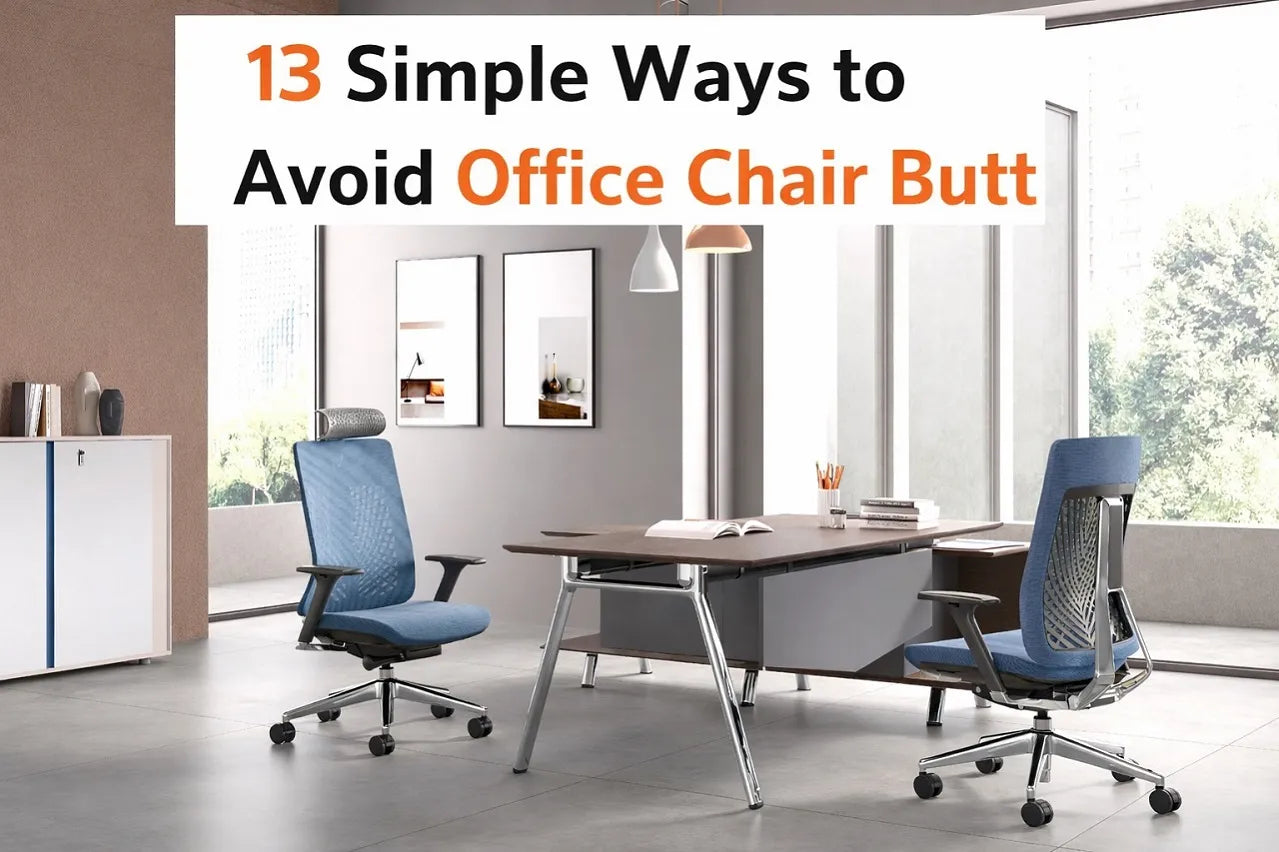
You are probably felt it before. That numb, flattened, uncomfortable feeling in your backside after a full workday. People casually call it office chair butt, but behind the joke is a real and increasingly common sitting problem.
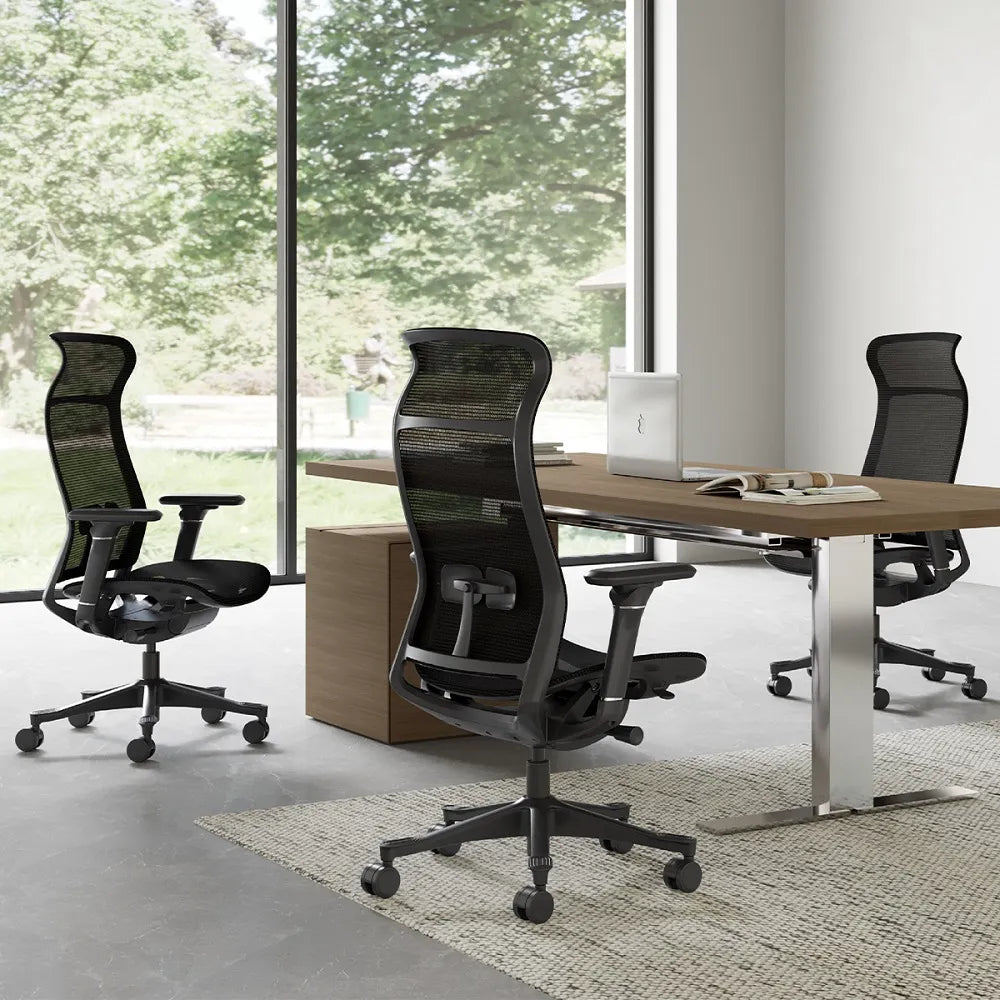
As someone who has spent more than 20 years researching, testing, reviewing, and writing about office chairs, seating ergonomics, and workplace comfort, I can tell you this clearly: office chair butt is not inevitable. It’s not just about weight, age, or how long you sit. In most cases, it’s about how you sit, what you sit on, and how often your body is allowed to move.
This guide breaks down 13 simple, proven, and realistic ways to avoid office chair butt, whether you’re working from home, in a corporate office, or setting up a workspace you want to feel good in long-term.
What Is Office Chair Butt, Really?
Before fixing the problem, let’s define it properly.
Office chair butt refers to discomfort, soreness, numbness, pressure buildup, or a “flattened” feeling in the glute area caused by prolonged sitting. It often comes with:
- Reduced blood circulation
- Pressure on the sit bones (ischial tuberosities)
- Compressed soft tissue
- Poor weight distribution
- Reduced muscle activation
Contrary to popular belief, it’s not just about having a “bad chair.” Even a premium chair can cause problems if it’s adjusted incorrectly or used without movement.
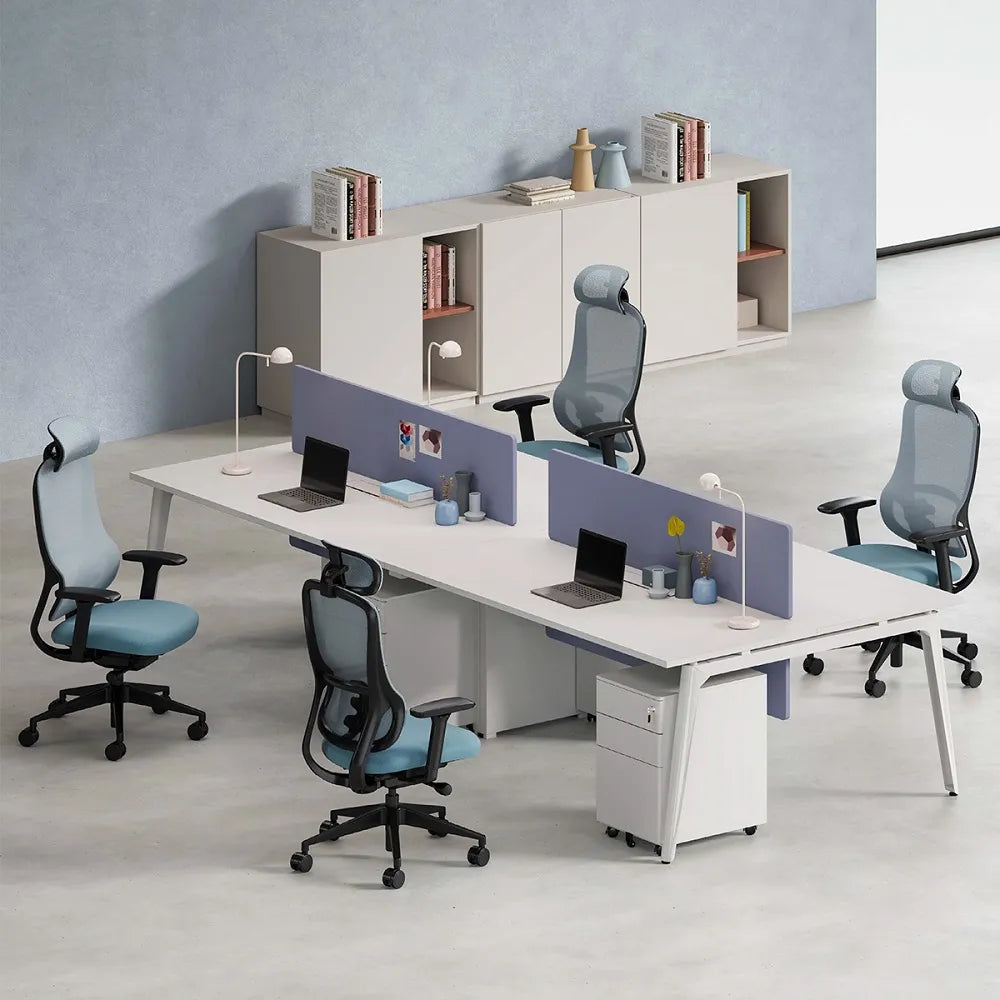
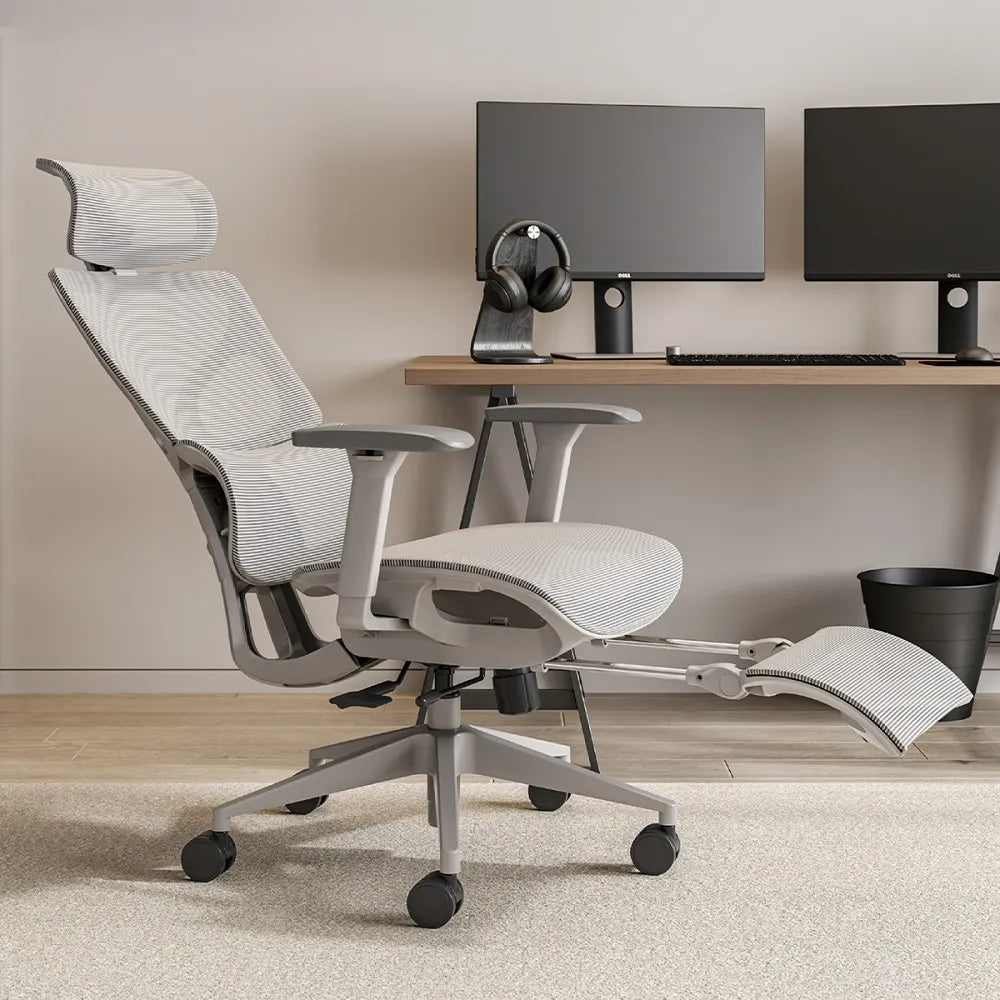
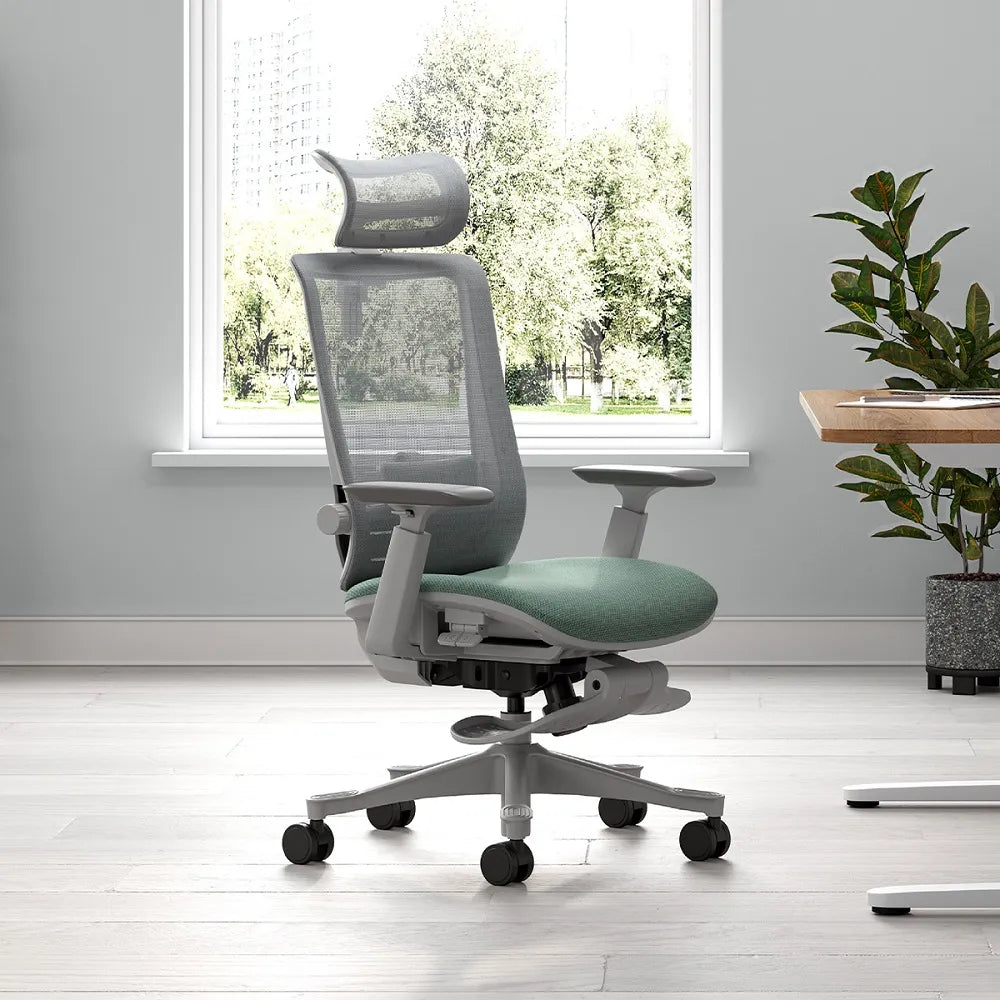
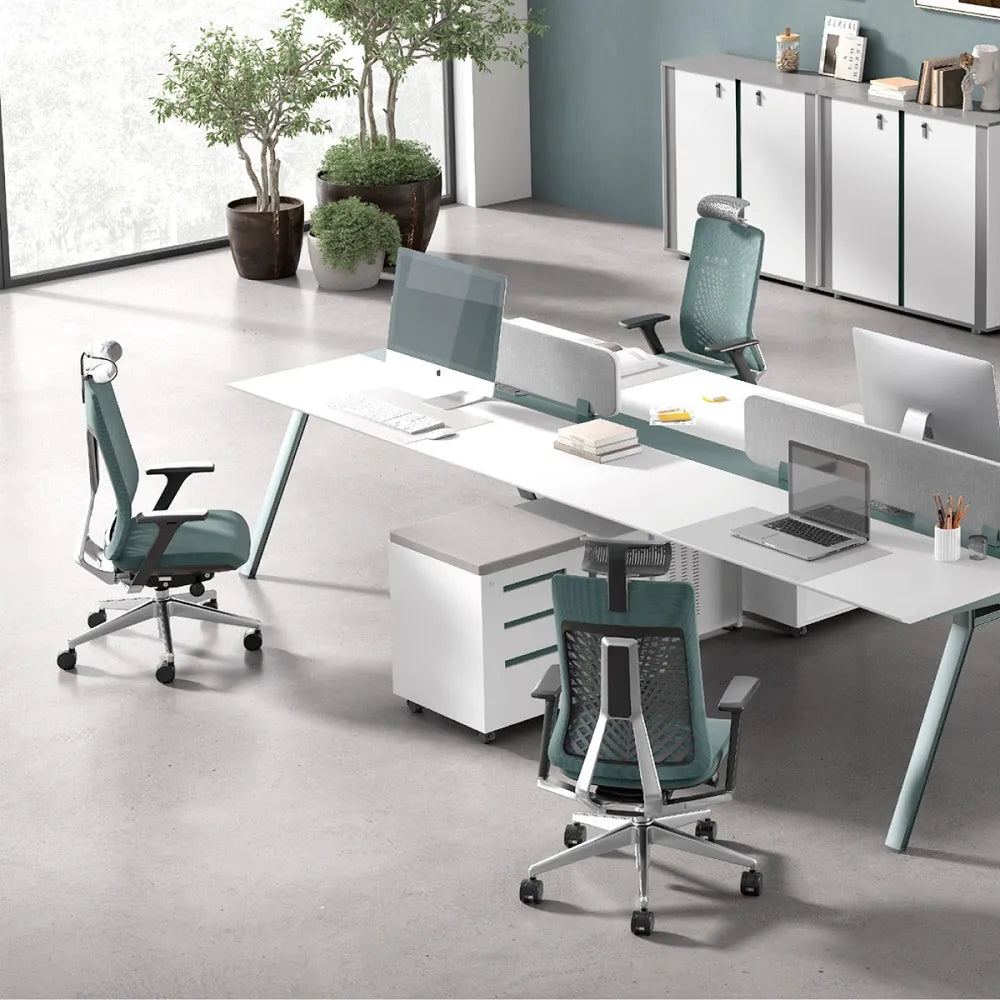
1. Invest in Ergonomic Chairs for Long Periods of Sitting
This is where experience really matters.
Not all chairs are built for extended daily use. A chair designed for short meetings will never feel good after eight hours.
Features that matter:
- Adjustable seat depth
- High-quality foam or mesh
- Proper lumbar support
- Stable base and smooth adjustments
A well-designed ergonomic office chair supports movement, posture, and pressure balance together.

2. Choose the Right Seat Cushion Depth
Seat depth is one of the most overlooked factors in preventing office chair butt.
If the seat is too deep, pressure concentrates at the back of the thighs and buttocks. If it’s too shallow, your weight isn’t evenly supported.
What to aim for:
- 2 to 3 fingers of space between the seat edge and the back of your knees
- Even weight distribution across the seat
- No pressure cutting into your thighs
Many modern ergonomic office chairs include adjustable seat depth for this exact reason.
3. Avoid Overly Soft Cushions
This sounds counterintuitive, but it’s critical.
A cushion that feels great for 10 minutes can be terrible after 5 hours.
Overly soft foam compresses quickly, allowing your sit bones to sink too deep. Once compressed, support disappears and pressure increases.
Better alternatives:
- Medium-firm molded foam
- High-density foam with rebound
- Mesh seats designed for pressure distribution
Long-term comfort always beats short-term softness.
4. Sit on Your Sit Bones, Not Your Tailbone
Many people slouch slightly backward, putting pressure on the tailbone instead of the sit bones.
Correct sitting position:
- Hips slightly higher than knees
- Pelvis neutral, not tucked
- Weight resting on sit bones
This simple posture adjustment alone can dramatically reduce butt discomfort.
5. Adjust Your Chair Height Properly
Incorrect chair height silently sabotages circulation.
When your seat is too low:
- More pressure builds in the glutes
- Blood flow is restricted
- Muscles stay inactive
When it’s too high:
- Thigh pressure increases
- Feet lose grounding
Ideal setup:
- Feet flat on the floor
- Knees at or slightly below hip level
- Thighs parallel or gently angled downward
This promotes better circulation and reduces pressure points.
6. Use a Breathable Seat Material
Heat buildup is a hidden contributor to office chair butt.
Poor airflow increases moisture, friction, and tissue fatigue, especially during long workdays.
Best materials for long sitting:
- Mesh office chair seats
- Breathable fabric blends
- Ventilated foam designs
7. Shift Your Sitting Position Regularly
Even perfect posture becomes bad posture if held too long.
Your body isn’t designed to stay still for hours, no matter how ergonomic the chair is.
Simple habit to build:
- Shift position every 20 to 30 minutes
- Lean back briefly
- Adjust seat angle or posture
Micro-movements prevent pressure buildup and muscle fatigue.

8. Take Standing or Walking Breaks Seriously
This sounds obvious, but most people underestimate how powerful it is.
Standing up resets pressure, restores circulation, and reactivates muscles that have gone dormant.
Practical approach:
- Stand up every 30 to 60 minutes
- Walk for 1 to 3 minutes
- Stretch lightly
You don’t need a full workout. Consistency matters more than intensity.
9. Strengthen Your Glute Muscles Outside the Chair
Weak glutes fatigue faster under pressure.
When muscles are underdeveloped, soft tissue absorbs more weight, increasing discomfort.
Helpful exercises:
- Bodyweight squats
- Glute bridges
- Lunges
- Resistance band walks
Stronger glutes mean better natural cushioning and endurance while sitting.
10. Avoid Sitting on Wallets or Hard Objects
This sounds minor, but it makes a real difference.
Sitting on a wallet creates uneven pressure, compresses nerves, and disrupts pelvic alignment.
Over time, this can contribute to:
- Butt numbness
- Hip imbalance
- Lower back discomfort
Keep your pockets empty when seated.
11. Use a Seat Tilt or Forward Tilt Function
Many people never touch this adjustment, but it’s incredibly effective.
A slight forward tilt:
- Shifts weight toward the sit bones
- Reduces tailbone pressure
- Encourages active sitting
12. Avoid Sitting for “Marathon Sessions”
Long uninterrupted sitting is one of the biggest risk factors for office chair butt.
Even if you love your chair, your body still needs variation.
Try this:
- Break work into 45 to 90 minute blocks
- Change posture between blocks
- Alternate sitting, standing, and moving
Think in cycles, not hours.
13. Consider a Quality Seat Cushion (If Needed)
A well-designed cushion can help, but only if used correctly.
Avoid cheap gel pads or ultra-soft cushions that collapse quickly.
Look for:
- Ergonomic contouring
- Firm support under sit bones
- Breathable materials
A cushion should enhance support, not replace it.

Final Thoughts:
Avoiding office chair butt isn’t about one magic solution.
It’s a combination of:
- Better chair setup
- Smarter sitting habits
- Regular movement
- Understanding how your body responds to pressure
When you address these factors together, sitting becomes something your body can tolerate, and even enjoy, for long periods.
After two decades in the seating industry, I can say this with confidence: small ergonomic habits consistently outperform expensive shortcuts.
Your chair matters. But how you use it matters even more.
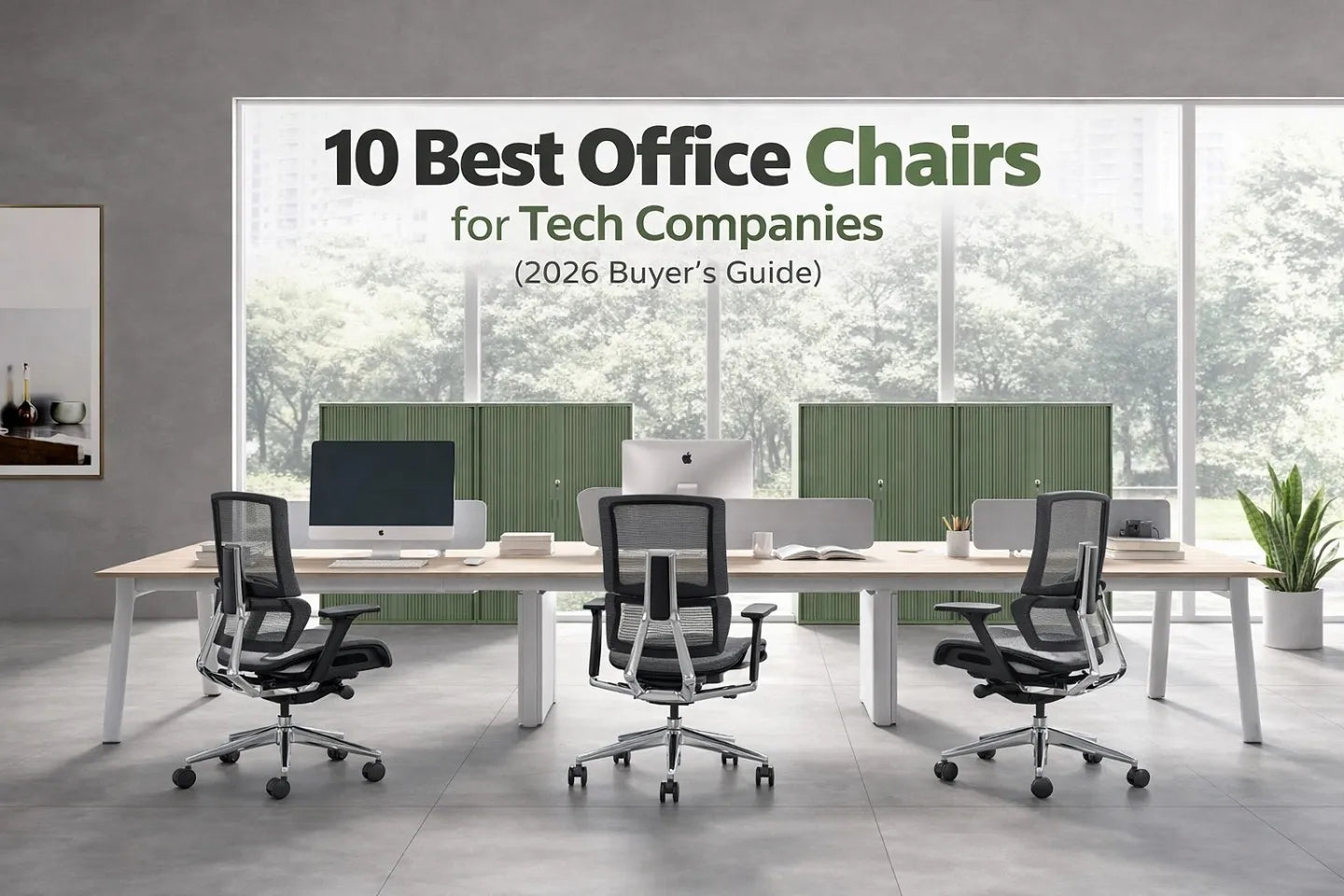
Read more: 10 Best Office Chairs for Tech Companies (2026 Buyer’s Guide)
FAQs
1.Is office chair butt permanent?
No. In most cases, it’s completely reversible with better seating habits and adjustments.
2.Does a mesh seat really help?
Yes. Mesh seats distribute pressure more evenly and improve airflow, which helps reduce discomfort.
3.How long should I sit before standing up?
Ideally every 30 to 60 minutes, even if just for a short movement break.
4.Can posture alone fix office chair butt?
Posture helps, but it works best when combined with movement and proper chair support.
5.Can a good office chair completely prevent office chair butt?
A good office chair can significantly reduce the risk of office chair butt, but it can’t eliminate it on its own. Even the best ergonomic chair works best when combined with proper posture, regular movement, and correct adjustments. Long periods of uninterrupted sitting can still lead to pressure buildup, which is why movement and sitting habits matter just as much as chair quality.

Deixar comentário
Os comentários precisam ser aprovados antes da publicação.
Este site é protegido por hCaptcha e a Política de privacidade e os Termos de serviço do hCaptcha se aplicam.